
The Mexican War Streets in 60 Seconds
-
Where it is: Pittsburgh's Central Northside, roughly bounded by Brighton Road, Federal Street, North Avenue, and Jefferson Street.
-
What it is: A federally listed and partially city-designated historic district of nineteenth-century rowhouses on Pittsburgh's North Side.
-
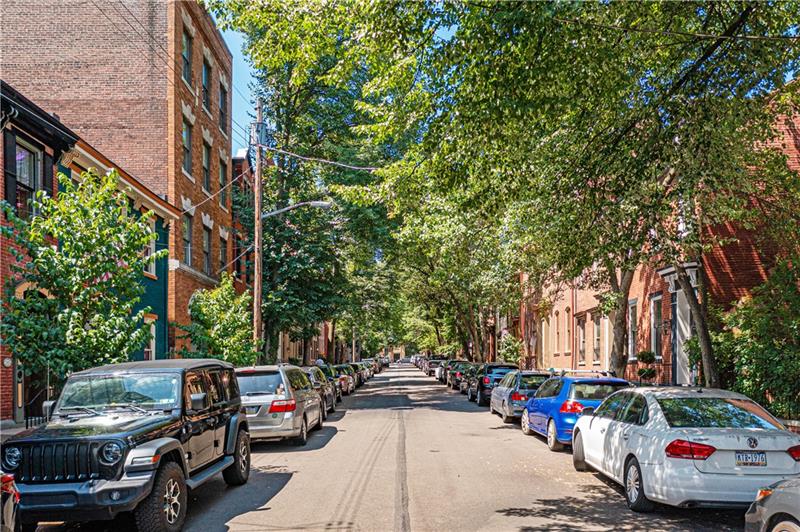
The vibe: Walkable, dense, artistic, and cohesive. Brick rowhouses, gas lamps, hidden gardens, public art around almost every corner.
-
Anchor institutions: The Mattress Factory, Randyland, City of Asylum, and Allegheny Commons / Lake Elizabeth — all within walking distance of every house.
-
Median sale price (Central Northside, March 2026): $465,000, up 4.5% year over year, per MLS.
-
Walk Score 72 / Transit Score 61 / Bike Score 71 for Central Northside — very walkable, good transit, very bikeable.
-
The catch: Exterior changes in the City-designated historic district go through the Historic Review Commission. Permit parking, older-house systems, and block-by-block variation all matter.
-
Who it's for: People who love historic urban architecture, walking to dinner, knowing their neighbors, and being five minutes from Downtown without paying Downtown prices.
Why I'm Writing This (And Why You Should Trust It)
I'm Heather Edmondson. My husband Ryan and I moved into the Mexican War Streets and stayed for eight years before recently moving — and even after moving, I kept right on selling here, because no other neighborhood in Pittsburgh has gotten under my skin the way MWS has.
I'm not the agent who shows up once a year with a generic Northside listing. I know which blocks get the best afternoon light. I know which streetscapes hold their value best. I know the difference between a "looks restored" house and an actually-restored house. I've sat through Historic Review Commission discussions. I've coached buyers through their first rowhouse inspection. And I've talked sellers off the ledge when a buyer's inspector got dramatic about a 100-year-old foundation that was, in fact, completely fine.
This guide is the one I wish someone had handed me in 2017. It's everything I'd tell a friend who was thinking about buying, selling, or renting in the Mexican War Streets in 2026.
1. Where Are the Mexican War Streets, Exactly?
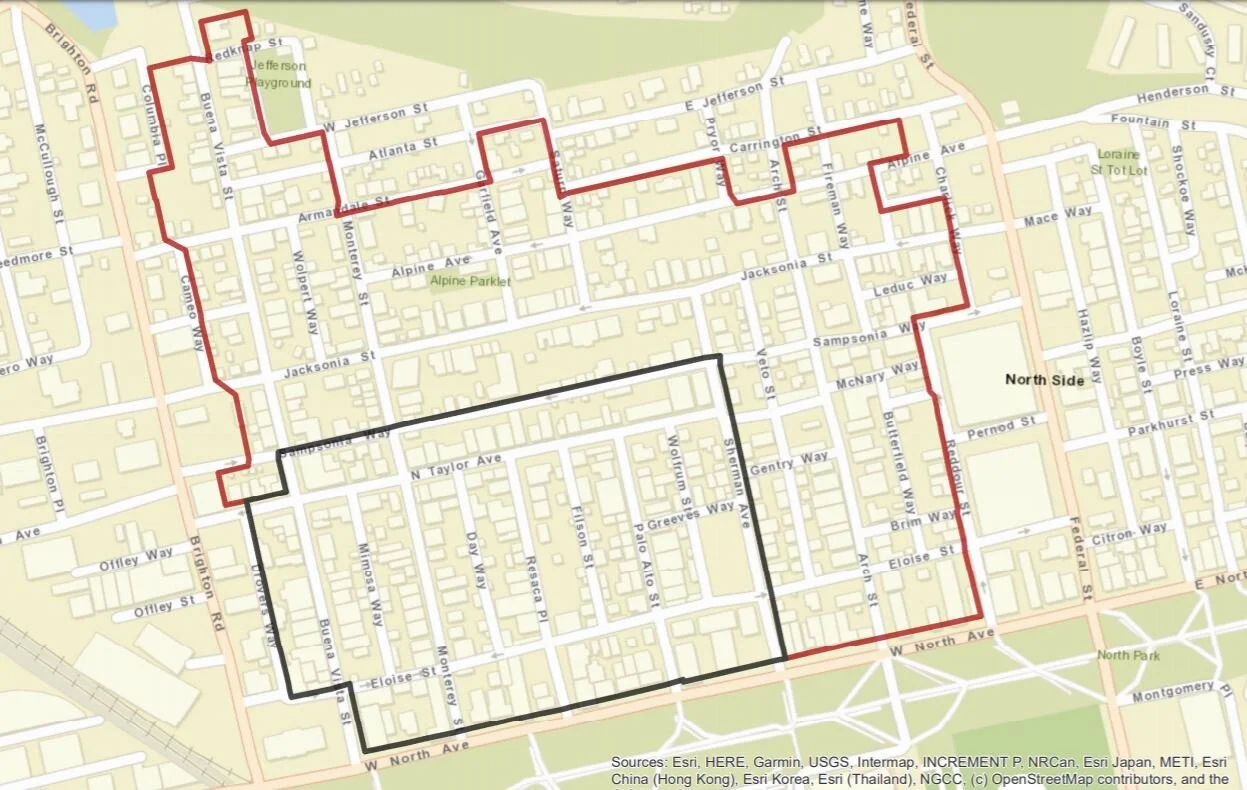
The Mexican War Streets sit in Pittsburgh's Central Northside — about a five-minute drive (or one bridge walk) from Downtown. The Mexican War Streets Society defines the neighborhood's commonly used boundaries as:
-
North: Jefferson Street
-
South: North Avenue
-
East: Federal Street
-
West: Brighton Road
That said — and this is important if you're buying — the City-designated historic district doesn't always line up exactly with the neighborhood's cultural boundaries. The original historic district was designated in 1975, and there's an expansion district as well. Whether a specific house is inside the City-designated district, the expansion area, or just the broader neighborhood identity area changes what you can and can't do to the exterior. I always pull this up parcel-by-parcel before we write an offer. More on that below.
Plain English: If your real estate agent can't tell you which historic-district overlay a specific house is in, find a real estate agent who can.
Why "Mexican War" Streets?
The streets — Monterey, Palo Alto, Resaca, Buena Vista, Taylor — are named for battles and figures of the Mexican-American War (1846–1848). The neighborhood was laid out by General William Robinson, a former mayor of Allegheny City, while the war was still being fought. Pittsburgh itself wasn't a battlefield, but local volunteer troops shipped out from here, and the naming reflects that moment in history.
It throws people off — the name doesn't have anything to do with Mexican culture or cuisine. It's a 19th-century real estate developer naming his streets after current events, the way someone today might name a development "Liberty" or "Freedom."
2. A Quick History (Because the Houses Won't Make Sense Without It)
Here's the short version of how we got to today's Mexican War Streets:
-
1846–1860s: Tracts like Buena Vista and Resaca are laid out and developed. Early houses go up.
-
Late 1800s–early 1900s: A thriving middle-class neighborhood — Irish and German families, professionals and workers living side-by-side in rowhouses.
-
1920s–1940s: Decline. Original families move out. Houses get carved into rooming houses or fall vacant.
-
1960s–1970s: The Pittsburgh History & Landmarks Foundation gets involved (1966), backed by Sarah Mellon Scaife Foundation funding. Instead of bulldozing, they buy and restore. This is the rare American urban-renewal story that's actually about preservation, not demolition.
-
1969: The Mexican War Streets Society is founded by residents.
-
1975: Designated a historic district. Federal listing on the National Register follows.
-
1975 → today: Cultural institutions move in — the Mattress Factory (founded 1977), City of Asylum (founded 2004), Randyland — and the neighborhood becomes one of Pittsburgh's most-recognized historic enclaves.
The lived experience of all of this is that the streetscape holds together. You're not looking at one preserved rowhouse next to a 1980s infill — you're walking through coherent blocks of nineteenth-century brick. That's rare in American cities. It's why MWS shows up in architecture textbooks.
3. The Architecture: What You're Actually Buying
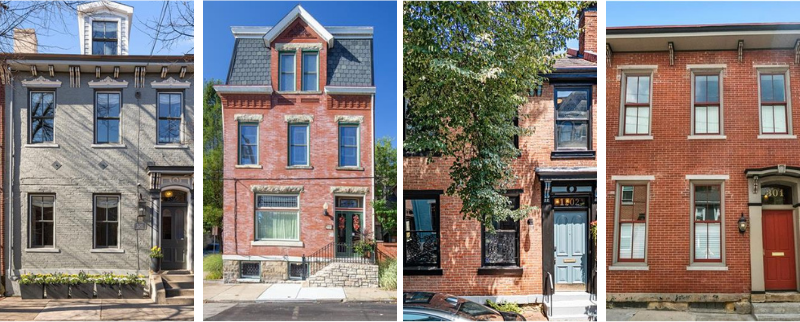
The National Register nomination identifies the district as a roughly 100-acre tract of architectural significance, with styles including:
-
Greek Revival
-
Italianate (the most common)
-
Second Empire (mansard roofs)
-
Richardsonian Romanesque
-
Victorian variations
Practically, here's what that means block by block:
-
Monterey, Resaca Place, Palo Alto, and Taylor — mostly three-bay brick rowhouses in Greek Revival or Italianate style. The classic MWS streetscape.
-
Buena Vista — includes a row of three-story Romanesque masonry houses with heavier stone detailing.
-
North Avenue — larger three- and four-story houses, often Italianate. Some of the biggest houses in the neighborhood face the park.
The features buyers fall for: high ceilings, tall windows, original wood trim and pocket doors, transoms, marble fireplaces, hidden courtyards, and brick exteriors that have been standing for 150+ years and aren't going anywhere.
What surprises people: how narrow rowhouse lots are. A typical MWS house is 14–20 feet wide. The layout is long and skinny. If you're coming from a suburban floor plan, the rhythm takes some adjustment.
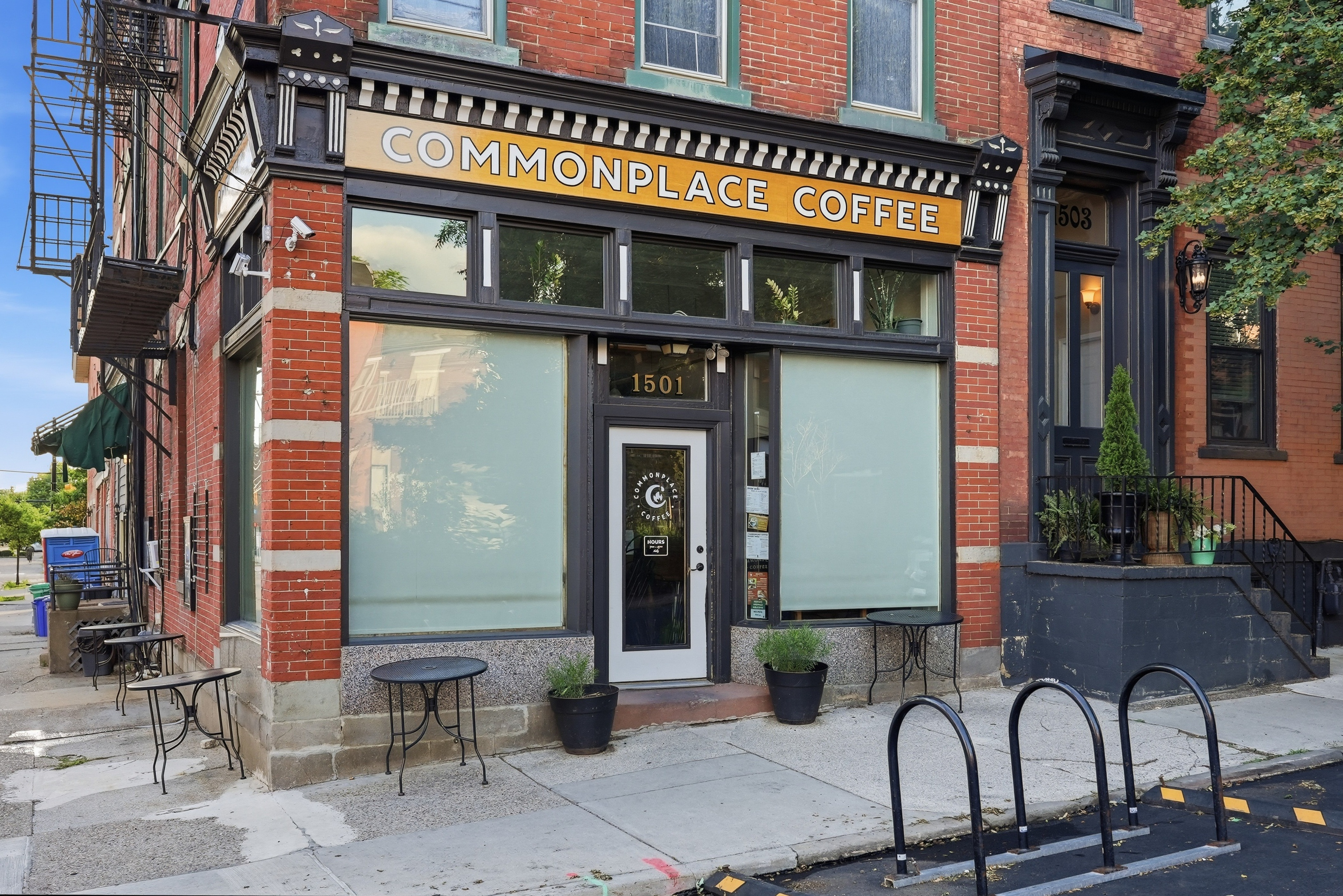
4. What It's Actually Like to Live Here (My Eight Years, Honestly)
This is the section where I can tell you what no research report can.
What we loved:
-
The walkability is real. Coffee at one of the corner shops, brunch at any number of Northside spots, the Aviary, the Children's Museum, PNC Park — all walkable.
-
The neighbors actually know each other. In MWS, we knew our block within a month. The Mexican War Streets Society puts on the House & Garden Tour, an annual yard sale, litter cleanups, garden work, holiday events — it's an active community, not a label. WOWS - Women of the War Streets: a monthly get together for connecting with other women in the area, at a different women's house each month. Bring an appetizer and wine! I still attend even though we don’t live in MWS anymore. 🙂
-
The art is everywhere. Not as a tourism gimmick. You walk past Randy Gilson's painted walls on the way to your car. You see "House Poem" — the calligraphic façade Huang Xiang painted at 408 Sampsonia Way — on your way to dinner. The Mattress Factory installations spill onto the street.
-
It's quiet for a city neighborhood. Brick rowhouses and narrow streets dampen sound. We slept with windows open most summers.
-
You feel close to Downtown without being in it. Five minutes by car. Twenty minutes on foot across the bridge. Free T light rail between Downtown and the North Side stations.
What was harder than we expected:
-
Parking can be a thing. We had one off street parking spot, my poor husband parked on the street. Our street only had parking on one side, but usually he found a spot on our block. Many blocks have Residential Parking Permit (RPP) — and it's currently $40 per vehicle per program year. There's a $10/year visitor pass per address. The permit does not guarantee you a spot on your own street, but deters parking on event days and a daily basis for commuters.
-
Street sweeping is unforgiving. Second Monday and Tuesday of each month, April through November. Miss it and you'll get a ticket. We had a shared reminder in our phones for years!
-
Game days and big museum days change everything. Steelers, Pirates, big Mattress Factory events. Plan errands accordingly.
-
Old houses are old houses. Things were always on a to-do list. The trade-off was a house that felt like it had a soul.
-
The Historic Review Commission process is real. If you’re within the Expanded Historic District, better ask to ask permission than forgiveness! When we wanted to do exterior work, we went through Certificate of Appropriateness review. It's not impossible — but it requires patience, the right contractor, and accepting that "I want black aluminum windows" might not survive the meeting. Plan budget and timeline accordingly.
What I miss now that we've moved:
The neighbors. The walk to dinner. The fact that I could leave my house at 7:30 a.m., grab a coffee, see three pieces of public art and two friends, and be back at my desk by 8. There is no other Pittsburgh neighborhood that gives you that.
5. The Cultural Anchors (And Why They Matter to Real Estate)
Most neighborhoods have a coffee shop or a park. MWS has cultural institutions that draw international visitors — and that proximity matters when you're pricing a home.
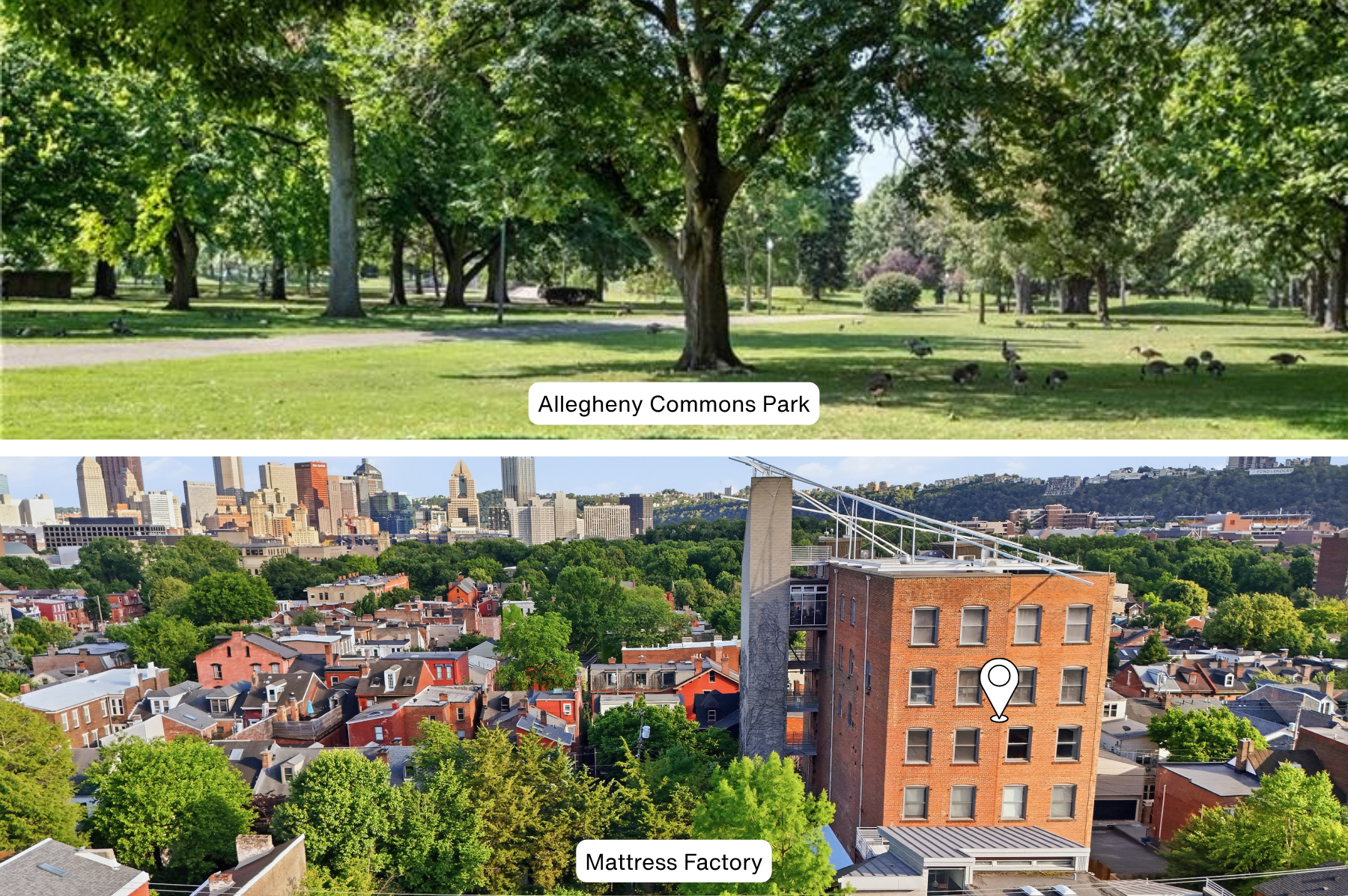
The Mattress Factory — 509 Jacksonia Street. An internationally known installation art museum founded in 1977 by Barbara Luderowski, who bought a former Stearns & Foster mattress warehouse at 500 Sampsonia Way in 1975. The museum now occupies three historic buildings inside the neighborhood. Most MWS residents have walked through it more times than they can count.
Randyland — Randy Gilson's folk-art compound. Free admission. Pittsburgh Magazine has profiled Randy multiple times. It's the kind of place you bring out-of-town visitors and watch them try to take a picture that captures it (they can't).
City of Asylum — Founded in 2004 by Northside residents Diane Samuels and Henry Reese, City of Asylum provides sanctuary to writers and artists who can't safely publish in their home countries. Their first writer, Huang Xiang, arrived in 2004 and created the "House Poem" façade at 408 Sampsonia Way. The organization runs free literary programming, plus Alphabet City — a bookstore and restaurant on the edge of the neighborhood.
Allegheny Commons / Lake Elizabeth — The major park immediately south of the neighborhood. Pittsburgh's oldest park, actually. Amazing dog park (no fence – so most usually only well behaved pups!) festivals, playgrounds, the whole thing.
Walkable beyond the neighborhood: The National Aviary, Children's Museum of Pittsburgh, Andy Warhol Museum, PNC Park, Acrisure Stadium, and a growing North Side restaurant scene.
When buyers ask me, "What's the cultural offering of the neighborhood?" — the honest answer is that very few Pittsburgh neighborhoods have this much packed inside a 100-acre walk.
6. Heather's Recent Mexican War Streets Sales
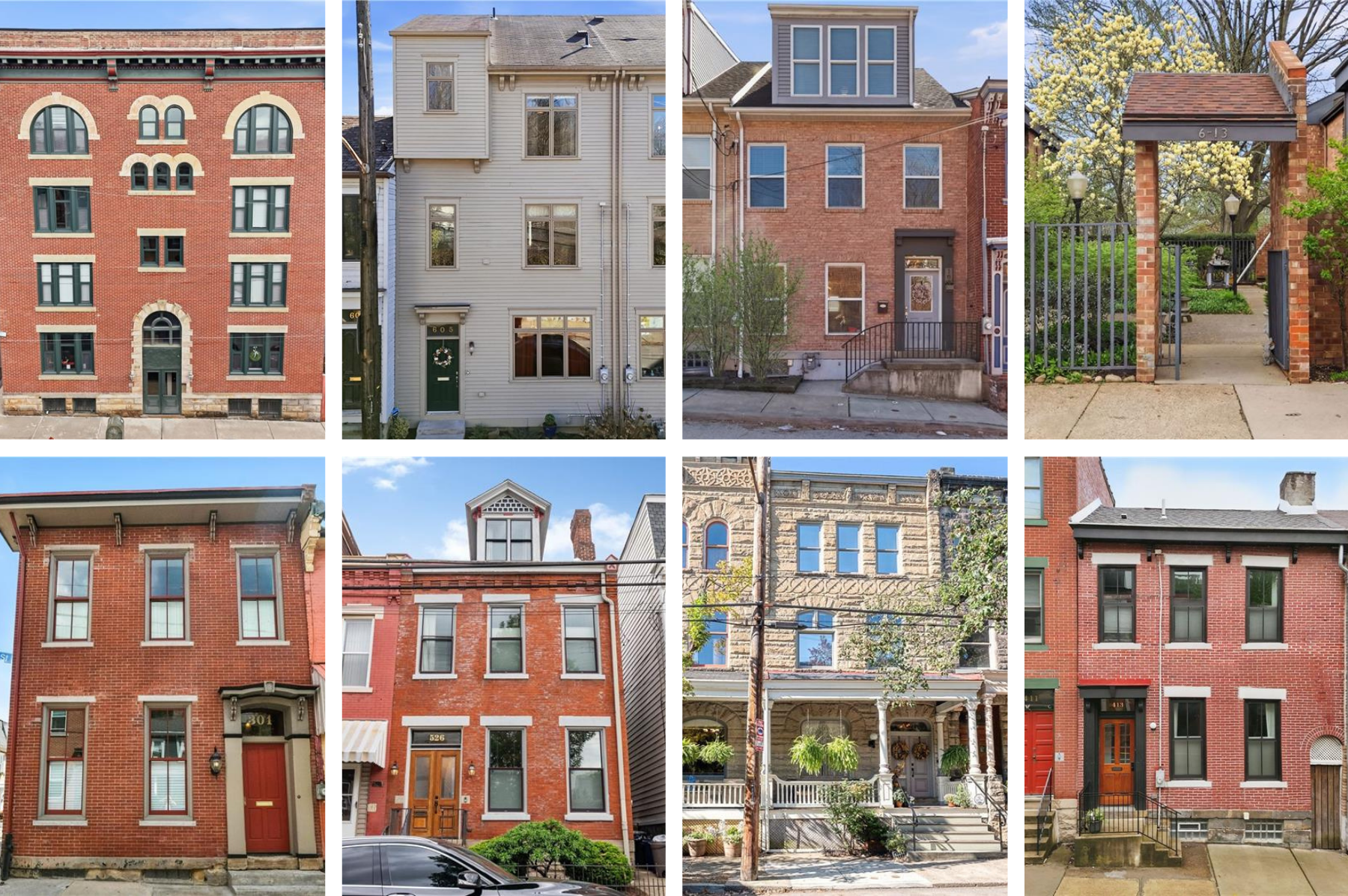
The houses below are a sample of recent transactions I've represented in the Mexican War Streets. Every one of them taught me something specific about what's moving in this neighborhood and why.
1112 Palo Alto St #A — Sold $280,000 | 2BR/2BA | 1,180 SF | 4 DOM | +1.8% over ask. Represented: Seller. Rare first-floor condo in Mexican War Streets with exposed brick and updated finishes; permit street parking only, no dedicated spot.
605 W Jefferson St — Sold $650,000 | 3BR/2.5BA | 2,160 SF | 4 DOM | At ask. Represented: Seller. Standout for newer construction (2016) in a historic neighborhood, with a 2-car integral garage and rooftop deck with Downtown skyline views.
6 Foster Sq — Sold $375,000 | 3BR/2.5BA | N/A SF | 4 DOM | +1.6% over ask. Represented: Both. High-end co-op end-unit with Carrara marble kitchen, reclaimed tin ceiling in the primary bath, and 2 dedicated parking spaces; monthly fee covers taxes, utilities, and HVAC.
19 Alpine Ave — Sold $520,000 | 3BR/2.5BA | 2,162 SF | 5 DOM | +5.1% over ask. Represented: Seller. One of the few newer builds (2012) in Mexican War Streets with 2 off-street parking spaces and city views from the upper levels.
301 Jacksonia St — Sold $542,500 | 3BR/1.5BA | 2,244 SF | 10 DOM | -1.4% under ask. Represented: Seller. Long-tenured owner renovation with a rare detached garage, vented island cooktop kitchen, and covered side porch with flagstone patio.
526 Armandale St — Sold $500,000 | 4BR/2.5BA | 1,936 SF | 57 DOM | +0.2% over ask. Represented: Seller. Intact original woodwork, pocket doors, and decorative fireplaces paired with smart home upgrades and one off-street parking spot.
413 Jacksonia St — Sold $586,000 | 4BR/2.5BA | 2,014 SF | 4 DOM | +1.9% over ask. Represented: Seller. Exceptional original detail throughout—Italian marble vestibule, custom milled walnut bookshelves, salvaged fireplace—plus a deep yard and walk-out basement.
1221 Buena Vista St — Sold $795,000 | 4BR/3.5BA | 3,200 SF | 11 DOM | At ask. Represented: Buyer. Carved 1895 stone Victorian shell fully rebuilt inside as an Arts & Crafts home with all-new mechanicals, heated floors, and a large sunroom replacing the backyard; prime first block.
If you're considering buying or selling on a specific block and want to know exactly what's traded there in the last 12–24 months, text or call me — I'm happy to send a private comp set.
7. What Buyers Need to Know Before Writing an Offer
If you're thinking about buying a Mexican War Streets home, here are the questions I'd want answers to before I let a client write an offer:
1. Is the house inside the City-designated historic district, the expansion area, or just the broader neighborhood? This changes what you can and can't change about the exterior. The City Historic Review Commission's jurisdiction generally covers portions of buildings visible from a public street or alley. Interior changes are not under HRC review, but they still require standard permits and code compliance.
2. What's the condition of the major systems? Roof, masonry, sewer line (camera it — always), electrical service, plumbing, HVAC, foundation, basement waterproofing. Older MWS homes have lived several lives. Inspect them like it.
3. Has prior exterior work been properly reviewed? Unpermitted exterior changes can become a buyer's problem if the City flags them later. Ask sellers for permit records, Certificates of Appropriateness, and contractor invoices.
4. What's the parking situation on this specific block? Permit zone? Visitor pass eligibility? Street sweeping schedule? Off-street spot or driveway? On some blocks parking is easy. On others, it's a daily negotiation.
5. What's the school assignment for the exact address? Pittsburgh Public Schools assigns every student by address. Use the PPS "Find a School" tool to verify. If you're interested in magnet programs, the process starts with enrolling at your assigned school first.
6. Insurance considerations. Older homes can affect coverage — knob-and-tube remnants, older roofs, masonry conditions, sewer-backup risk. Get a quote before you're under contract.
7. Renovation feasibility. If you have a renovation plan, run it past me and an architect who's done MWS work before you write the offer. HRC review timing affects your project — and your budget.
8. Climate and environmental. The Redfin / First Street climate data for Central Northside reports minor flood risk overall (12% of properties at severe-flood risk over 30 years), minimal wildfire risk, minor wind risk, and moderate heat risk. Verify FEMA flood maps and basement-water history for the specific address.
8. What Sellers Need to Know Before Listing
If you're thinking about selling in the Mexican War Streets, the difference between a strong sale and a disappointing one usually comes down to three things:
1. Tell the story with evidence, not adjectives. "Beautifully restored" means nothing. "1880s Italianate with restored pocket doors, refinished original heart-pine floors, COA-approved exterior masonry repair completed 2024" — that's a story buyers can believe.
2. Build the property-history file before you go live. HRC Certificates of Appropriateness, building permits, contractor invoices, roof and masonry records, sewer-camera reports, mechanical documentation, utility bills, restoration photography. Buyers in this neighborhood are savvier than the average buyer. They reward documentation.
3. Price for the specific house, not the neighborhood average. With monthly transaction counts in single digits, a generic comp pull will mislead you. Two houses on the same block can trade $200K+ apart based on condition, renovation quality, parking, and outdoor space. Pricing needs to come from the parcel up, not from the neighborhood down.
I won't list a MWS house without doing this work. I've been on too many calls with sellers from other listings who priced 15% off either direction because their agent treated MWS like any other Pittsburgh neighborhood.
9. Frequently Asked Questions About the Mexican War Streets
Q: Where are the Mexican War Streets in Pittsburgh? A: On Pittsburgh's North Side, in the Central Northside area. The commonly cited boundaries are Brighton Road to the west, Federal Street to the east, North Avenue to the south, and Jefferson Street to the north.
Q: Why are they called the Mexican War Streets? A: The streets were named after battles and figures of the Mexican-American War (1846–1848) — Monterey, Palo Alto, Resaca, Buena Vista, Taylor. General William Robinson, a former mayor of Allegheny City, laid out and named the streets while the war was being fought.
Q: Is the Mexican War Streets a historic district? A: Yes — it's federally listed on the National Register of Historic Places (Reference #75001612) and is partially designated by the City of Pittsburgh, with an expansion area as well. Whether a specific property falls within the City-designated district affects what exterior changes require Historic Review Commission approval.
Q: How much do homes cost in the Mexican War Streets? A: The Central Northside median sale price was $465,000 as of March 2026, up 4.5% year over year, per Redfin. Individual MWS homes range widely based on size, restoration level, parking, and block. Some restored rowhouses trade well above $600K; some unrenovated properties trade below the median.
Q: Is the Mexican War Streets a good place to live? A: It depends on what you want. If you value historic architecture, walkability, an active community, and proximity to cultural institutions and Downtown, it's one of the best neighborhoods in Pittsburgh. If you want a large yard, easy off-street parking, and a newer house, it's not the right fit.
Q: What can I change about the exterior of my Mexican War Streets house? A: If your property is in the City-designated historic district, exterior changes visible from a public street or alley require a Certificate of Appropriateness from the Historic Review Commission. This applies to windows, doors, siding, porches, railings, masonry, additions, and demolition. Interior changes are not under HRC review. Always verify your parcel's specific status before planning work.
Q: What's parking like in the Mexican War Streets? A: Most blocks require a Residential Parking Permit (currently Area HH on many MWS streets). The Pittsburgh Parking Authority charges $40 per residential permit per vehicle per program year and $10 per annual visitor pass per address. The permit does not guarantee a spot on your specific street. Street sweeping is the second Monday and Tuesday of each month, April through November.
Q: What schools serve the Mexican War Streets? A: Pittsburgh Public Schools assigns every student to a school by address. Use the PPS "Find a School" tool to identify the assignment for a specific property. Magnet programs require initial enrollment at the assigned neighborhood school, then a magnet application through Home Access Center.
Q: Who is the best real estate agent for the Mexican War Streets? A: I'll let my track record answer that one — but I'd say find an agent who has actually represented buyers and sellers in MWS, understands the Historic Review Commission process, and can pull parcel-specific historic-district status before writing an offer. If that's a useful filter, text me — I'd love to talk.
10. Working With Me
I'm Heather Edmondson. I co-lead Edmondson Real Estate Group (ERG) at Keller Williams Exclusive in Pittsburgh with my husband Ryan. I specialize in the Mexican War Streets and the broader Northside.
If you're thinking about buying or selling in MWS — or you just want a parcel-specific read on a house you've been watching on Zillow — here's how to reach me:
-
Call or text: 412-370-1815
-
Email: heather@ergpgh.com
-
Website: ergpgh.com
I'm happy to talk before you're ready to make a move. The earlier the conversation starts, the better the outcome usually is.

Sources for the data and history cited in this post: Mexican War Streets Society, City of Pittsburgh Historic Review Commission, National Register of Historic Places nomination (NRHP #75001612), Pittsburgh History & Landmarks Foundation, Redfin Central Northside market data, City of Pittsburgh Neighborhood Snapshot (ACS 2018–2022), Pittsburgh Parking Authority, Pittsburgh Public Schools, the Mattress Factory, City of Asylum, and WESA. All market data current as of March 2026. Always verify property-specific details for the exact parcel you're considering.