

Before I sold houses, I rode. I grew up training as an equestrian riding hunter/jumper, so I've spent as many years reading pastures, fence lines, and barns as I have reading listing sheets. These days, I hear a version of the same dream from a lot of buyers moving out of the city: a little land, a few animals, maybe a barn: a real hobby farm.
The question I get asked most isn't about square footage or school districts. It's “What am I actually allowed to keep out there?” The honest answer is: it depends entirely on which township you buy in, and most buyers don't find that out until after they've already made an offer.
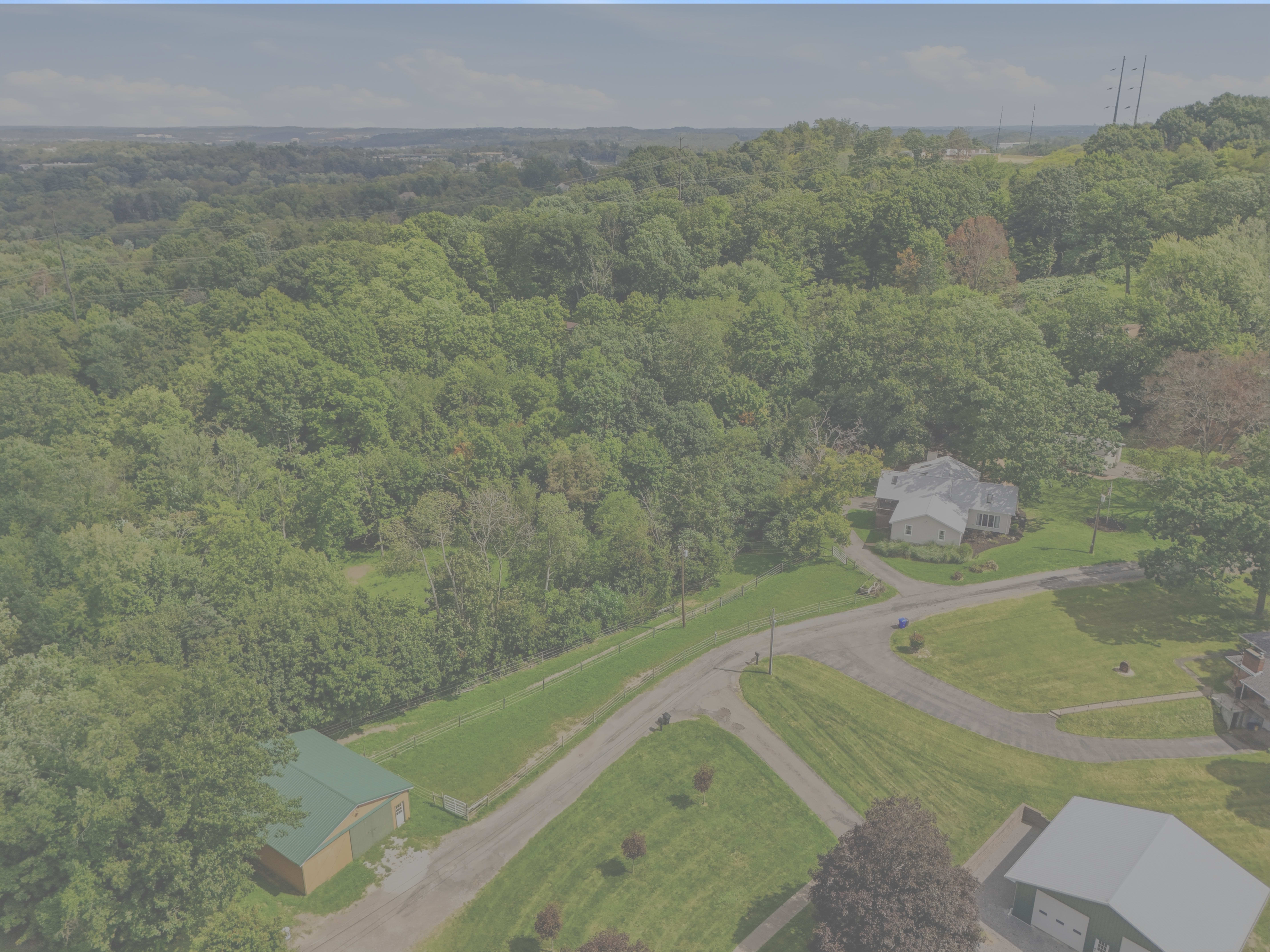
I'm writing this now because I just listed a property that puts these exact questions front and center: 40 Everly Lane in North Fayette Township — 8.73 acres with a 4-stall barn, fenced pasture, garden space, and wooded acreage, listed at $799,000. It's the kind of property where "what am I allowed to keep here" actually has good answers, which is what got me writing this guide in the first place.
View the listing at 40 Everly Ln, Imperial, PA »
So here's a real, practical guide to how hobby farm and homesteading zoning actually works around Pittsburgh, using an actual township ordinance — North Fayette Township, where 40 Everly Lane sits — as a working example.
The Short Answer: There Is No Regional Standard; Every Municipality Writes Its Own Rules
Before we get into specifics, here's the contrast that matters most:
Setting What's Typically Allowed
|
City of Pittsburgh (urban ag zoning) |
Up to 5 hens (no roosters), 2 beehives, 2 miniature goats — permit required |
|
Rural/exurban township example — North Fayette Twp |
Up to 8 horses (acreage formula), 10 chickens, 5 ducks, 6 beehives, plus goats/pigs/cattle under agricultural standards |
|
Every other municipality |
Its own ordinance entirely — could be more permissive or far more restrictive than either example above |
Sources: City of Pittsburgh Urban Agriculture Zoning Code; North Fayette Township Zoning Ordinance, Chapter 27, §§ 27-801–805.
Why Hobby Farm Zoning Varies So Much
Pennsylvania has more than 2,500 municipalities, and each one writes and enforces its own zoning ordinance. There's no statewide “hobby farm code”. What your neighbor two townships over is allowed to keep tells you nothing about what you'll be allowed to keep.
Here's how to think about it:
Urban and inner-ring ordinances use square-footage math. Pittsburgh proper, for example, ties animal counts to lot size in 1,000–2,000 sq ft increments, and caps hens at five with no roosters allowed at all.
Rural and exurban townships more often use acreage-based formulas and usually require a minimum lot size before larger animals are permitted at all, regardless of how many acres you eventually want to fill.
Almost everywhere, a permit is required, even for a handful of chickens, and setback distances from your property line matter as much as the headcount.
Pennsylvania's Right-to-Farm (ACRE) law protects legitimate agricultural operations from illegal local restrictions, but it does not override a valid local ordinance. It's a backstop, not a substitute for checking the rules first.
The Animals, One by One
To make this concrete, the examples below use North Fayette Township — a rural/exurban township in western Allegheny County, and home to the 40 Everly Lane listing mentioned above — as a real-world reference point, since its ordinance is publicly available and typical of how these townships approach hobby farming. Your township's numbers will almost certainly be different. Treat every figure here as “here's the kind of thing to ask about,” not as a number you can rely on outside that specific township.
Horses & Ponies
Often the most tightly regulated and the most acreage-dependent
Rural townships frequently gate horse-keeping behind a minimum lot size, then scale the number allowed with acreage beyond that. North Fayette Township, for example, permits a private stable only on 5+ acres, owner-occupied, in its R-1 and R-2 residential districts one horse or pony on the first three acres, then one additional animal per acre after that, up to a cap of eight. Setback requirements are specific to each use: stable and barn buildings must sit at least 75 feet from any lot line, and grazing areas must stay at least 100 feet from any occupied dwelling.
Ask your township: What's the minimum lot size for a private stable, what's the per-acre formula, and how far must the stable and grazing area sit from my lot lines and my neighbors' houses?
Cows & Larger Livestock
Sometimes zoned specifically, sometimes folded into general “agriculture”
Cattle, including mini cows, don't always get their own line item the way horses and chickens do. Some townships set an explicit cap, while others treat them under a general “normal agricultural operation” standard governed by the state's Act 133, with fewer hard numeric limits once you clear the acreage and permit threshold. That distinction matters, because it changes whether you're working from a fixed cap or a broader agricultural allowance.
Ask your township: Do larger livestock fall under a specific numeric limit in the ordinance, or under the general agricultural-operation standard and what triggers that classification?
Goats, Sheep & Pigs
Watch the setback distances, not just the headcount
These are usually allowed in some form on rural-zoned acreage, but the details bite: dehorning requirements for goats are common, and swine in particular tend to carry much larger setbacks than other animals — North Fayette requires poultry and swine holding areas to sit 500 feet from any lot line, which effectively rules them out on smaller parcels no matter what the headcount limit says. Wooded acreage that can't be built on anyway is often exactly where these setbacks fit best.
Ask your township: What's the required setback for goat, sheep, or pig housing and does my usable acreage actually clear it?
Chickens, Ducks & Poultry
The most commonly permitted — and the most commonly capped
Nearly every municipality in the region allows some number of backyard chickens, almost always through a permit and a square-footage formula rather than a flat number. North Fayette allows up to 10 hens (3 per 4,000 sq ft, plus 1 per additional 2,000 sq ft) and up to 5 ducks on 1+ acre lots; Pittsburgh proper caps hens at 5 per 2,000 sq ft. Roosters, on-site slaughtering, and commercial egg sales are commonly prohibited even where hens themselves are welcome.
Ask your township: Is a permit required, what's the per-square-foot ratio, and are roosters or on-site processing allowed?
Bees
Two layers of rules: your township, and the state
Beekeeping is one of the more commonly welcomed hobby farm activities, but it's regulated twice over. Locally, townships typically cap hive counts and require setbacks from property lines and pools — North Fayette allows up to 6 hives with a 15-foot setback from lot lines, while Pittsburgh proper caps hives at 2 per 2,000 sq ft. Separately, Pennsylvania's state Bee Law requires every beekeeper in the Commonwealth to register their apiary with the Department of Agriculture — currently a $10 fee covering about two years — regardless of what your local ordinance says.
Ask your township: What's the hive cap and setback and don't forget the separate step of registering with the PA Department of Agriculture.
What Pennsylvania's Right-to-Farm Law Does (and Doesn't) Do
It's a backstop against illegal restrictions not a substitute for checking the ordinance.
Pennsylvania's Agriculture, Communities and Rural Environment (ACRE) law lets a property owner ask the state Attorney General to review a local ordinance that improperly restricts a normal agricultural operation, and gives owners a path to challenge an illegal ordinance in Commonwealth Court. That's real protection — but it only kicks in after a dispute, and it doesn't erase a validly enacted local limit on, say, hive counts or chicken permits. It also doesn't help you at all if you find out about a restriction after closing rather than before making an offer.
And a caution that applies everywhere, not just in any one township: what a previous owner kept on a property isn't a guarantee of what you'll be allowed to keep. Ordinances change, non-conforming uses don't always transfer, and “we were told” isn't the same as a permit in hand. Always confirm current zoning with the township directly before you count on it.
Thinking About Buying a Hobby Farm Near Pittsburgh?
I can walk you through a specific township's ordinance before you write an offer, not after. In fact, my listing at 40 Everly Lane in North Fayette Township is live right now and checks a lot of these boxes: 8.73 acres already zoned and improved with fenced pasture, a 4-stall barn with utilities, garden space, and wooded acreage — room for horses, a milk cow, goats, chickens, and bees, all under North Fayette's ordinance. It's listed at $799,000. If that sounds like what you're picturing, let's talk.
See the full listing at 40 Everly Ln, Imperial, PA 15126 »
maddy@ergpgh.com | 724-831-9258
No pressure. Just straight answers from someone who'll actually read the ordinance with you.
About the Author
Maddy Gryger is a real estate agent with Edmondson Real Estate Group | Keller Williams Exclusive in Pittsburgh, PA. An equestrian who grew up riding hunter/jumper, she works with buyers and sellers of horse properties, hobby farms, and acreage across the greater Pittsburgh region.
Zoning details referenced here are drawn from the North Fayette Township Zoning Ordinance (Chapter 27, §§ 27-801–805), the City of Pittsburgh's Urban Agriculture Zoning Code, Pennsylvania's ACRE/Right-to-Farm law, and the PA Department of Agriculture's Apiary & Pollinator Services program. Ordinances vary by municipality and change over time — always verify current rules with your specific township before making an offer. Property details for 40 Everly Lane are believed reliable but not guaranteed; verify independently.