
Mortgage Affordability Calculator

Understanding Your Home-Buying Budget
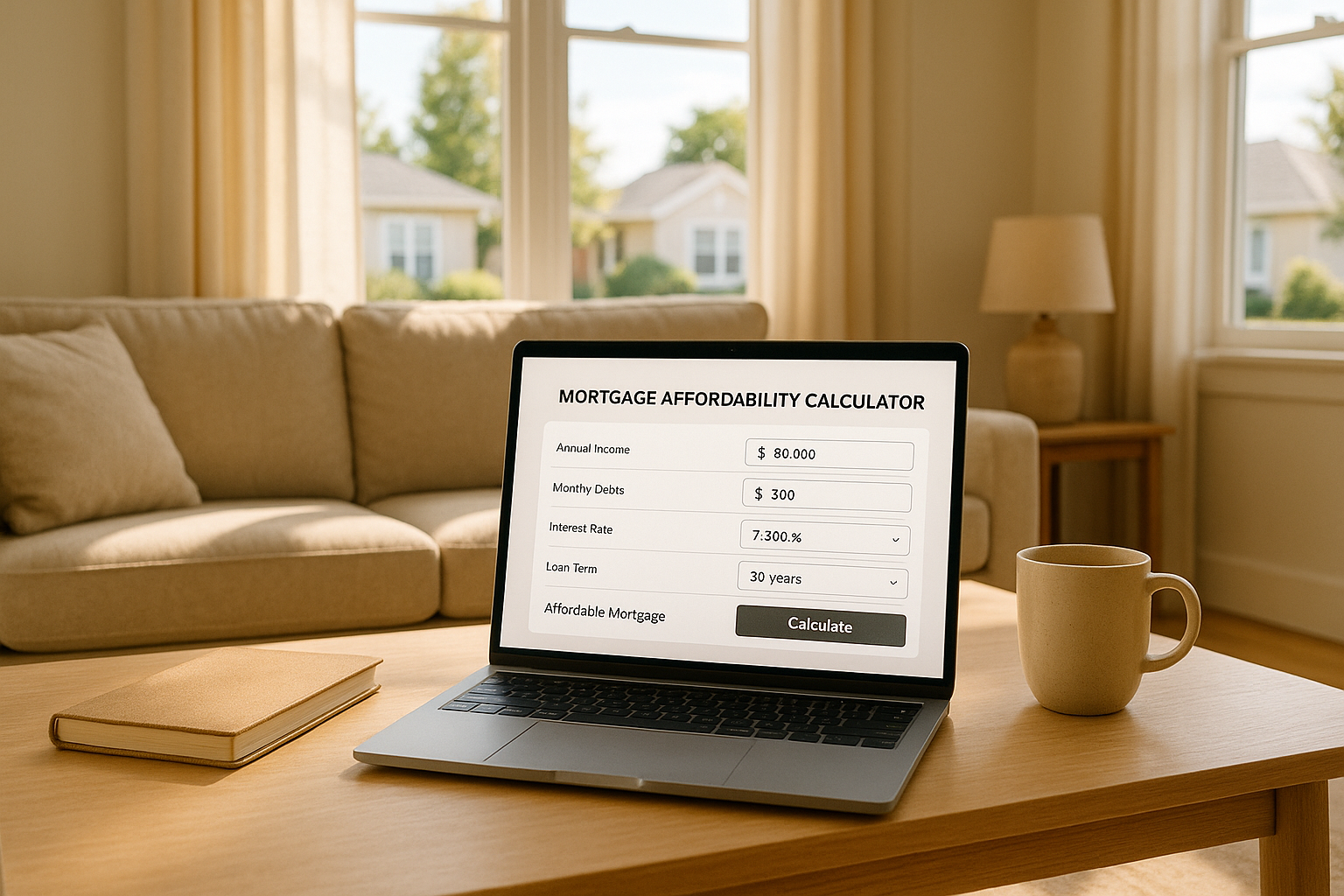
Navigating the world of home buying can feel overwhelming, especially when figuring out how much you can spend. A tool like a mortgage affordability calculator simplifies this by breaking down complex financial factors into easy-to-understand numbers. It’s all about aligning your dreams with your reality—whether you’re a first-time buyer or upgrading to a bigger space.
Why Affordability Matters
Before you start touring open houses, knowing your price range is crucial. This isn’t just about the sticker price of a home; it’s about understanding how your income, existing debts, and savings fit into the equation. Tools that estimate your purchasing power consider things like down payments and loan terms to paint a clearer picture. They often use benchmarks like debt-to-income ratios to ensure you’re not stretching your finances too thin.
Beyond the Numbers
Keep in mind that while calculators provide a great baseline, other elements—like your credit history or local market trends—can influence what a lender offers. Pairing this insight with advice from a financial expert can help you make informed decisions. So, take that first step, crunch the numbers, and start envisioning your future home with a bit more clarity and confidence.
FAQs
What is a debt-to-income ratio, and why does it matter?
Your debt-to-income ratio, or DTI, is the percentage of your monthly income that goes toward debt payments. Lenders use it to gauge how much more debt—like a mortgage—you can handle. Typically, they prefer a DTI between 28-36% for mortgage approval. Our tool uses this range to estimate a safe monthly payment after accounting for your existing debts, so you’re not overextending yourself.
Can I trust the results of this calculator for my home purchase?
This calculator gives a solid starting point based on standard lending guidelines, like DTI ratios and typical loan terms. However, every lender has unique criteria, and your credit score, savings, and other factors play a role. Think of this as a helpful guide to narrow your search, but always chat with a mortgage professional to confirm what you qualify for.
How does the loan term affect my affordability?
The loan term—whether 15 or 30 years—impacts both your monthly payment and the total interest you’ll pay. A shorter 15-year term means higher monthly payments but less interest over time, often limiting the loan amount you can afford. A 30-year term lowers your monthly cost, potentially increasing your max home price, though you’ll pay more interest in the long run. Play around with both options in the tool to see what fits your budget best!